Structural Innovation: Master Trusts in Aircraft ABS Transactions
Articles
Demi Hueth and David Berkery outline how the aviation ABS market exceeded $10.3 billion in 2025 and introduced a key structural innovation: the master trust. This flexible structure enables issuers to finance multiple aircraft portfolios over time from a single trust, improving efficiency and lowering costs. As investor familiarity with identified and blind pools increases, master trusts are positioned for continued use in 2026 and beyond.
The aviation asset-backed securitization (ABS) market continues to strengthen. Aviation ABS activity in 2025 exceeded US$10.3 billion in public issuances across 16 deals, and several first-time issuers entered the market.
Against this backdrop of market growth, a structural innovation also emerged: the master trust structure. Long common in other asset classes, the master trust took off in the aviation sector in 2025. This structure will not be right for every issuer, but it has advantages for certain issuers that should ensure its ongoing use in 2026 and beyond.
What Is a Master Trust?
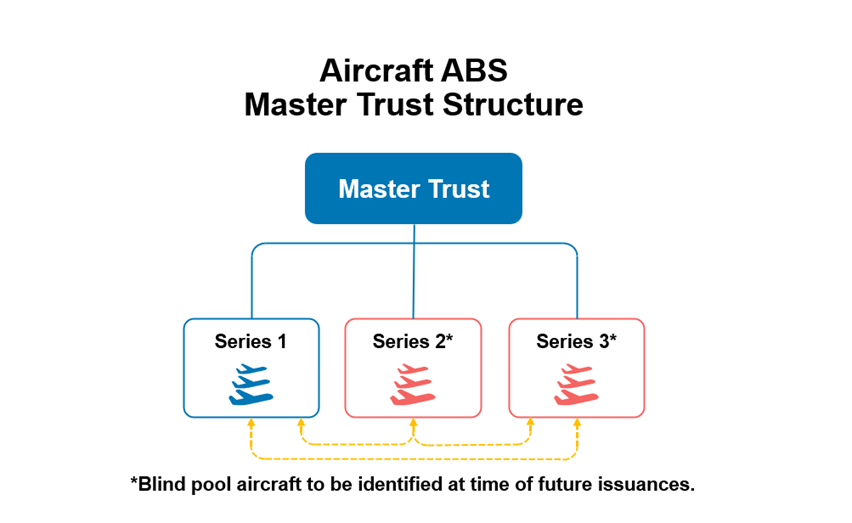
A master trust is a flexible securitization structure in which a single master issuer issues multiple series of cross-collateralized notes over time. Unlike in traditional single-issuance aircraft securitizations, assets within a master trust are not ring-fenced to an individual note issuance; instead, all series share an interest in the entire asset pool. Operating under a hub-and-spoke model, the master trust serves as a central repository of assets, while different note series with varying terms, tranches, and payment priorities are issued as needed over time, providing issuers with long-term financing flexibility and economies of scale.
Why Use a Master Trust?
Master trust structures offer numerous benefits. These include providing flexibility, scalability and efficiency over the life of a financing program, which can lower overall funding costs for issuers. By allowing multiple issuances of note from a single trust, master trusts can enable issuers to execute additional offerings more quickly than would be possible with stand-alone transactions, while reducing the legal, rating, management, and structuring costs associated with subsequent deals.
Master trust structures can also support portfolio acquisitions of any size, as new aircraft may be added to the master trust in connection with an issuance of new notes. Master trusts are particularly well suited to funding portfolios that may be too small to justify independent securitizations, and they allow issuers to re-lever assets after several years of amortization by issuing new notes backed by already-owned collateral.
For example, a master trust structure might make sense for an issuer set to acquire two portfolios, each comprising 10 aircraft, from two separate sellers on different timelines. A master trust structure would allow the issuer in this example to issue two separate series of notes, one for each of the portfolios. Issuing two series of notes would save the issuer money on debt service, by allowing the issuer to finance each portfolio on a separate timeline in smaller chunks, rather than having to make one larger issuance and immediately accruing interest on that larger amount.
Identified Pools Versus Blind Pools
Two distinct approaches to portfolio identification and composition have emerged in aviation master trust structures: identified pools and blind pools. In the identified pool approach, all aircraft to be financed through the master trust structure across multiple issuances are identified upfront. This approach gives investors in each issuance the comfort of knowing in advance which other assets could be added to the collateral pool and financed under the same structure.
In a blind pool approach, aircraft in the initial series are pre-identified, but aircraft collateralizing future series issued by the master trust are not known at initial closing. As in warehouse facilities, blind pool master trust structures have robust eligibility criteria designed to protect the quality and creditworthiness of the collateral pool. These protections may include limits on aircraft types, limits on lessee jurisdictions, diversity requirements, age limits, and lessee credit requirements.
Adoption of the blind pool approach aligns aviation financing more closely with master trust structures in other asset classes. In the energy sector, for example, Vinson & Elkins has developed a master trust structure that allows issuers to finance production from previously unidentified oil and gas wells operated by the same sponsor. In connection with new series issuances, there are collateral eligibility requirements on the wells to be added and other financial covenants that must be met.
The Future of the Master Trust in Aviation
Master trusts can be an effective tool for issuers seeking to maintain consistent market access and optimize the economics of asset-backed financing programs. Yet despite its many advantages, the master trust structure also has potential downsides. As discussed above, investors may deal with identified pools and blind pools differently, which could affect pricing. Because all notes across multiple issuances will be cross-collateralized, investors may prefer to have full visibility of all potential additional aircraft. As a result, master trust structures may be most suitable in the near term for frequent issuers who are already well-known to investors with identified pools.
That said, blind pools are common in other ABS asset classes, as investors have grown more comfortable with the master trust structure. Even within aviation, investors have grown comfortable with a certain amount of blind pool risk in the form of reinvestment rights incorporated in traditional aviation ABS structures, and blind pool risk is common in warehouse financings. As the master trust structure continues to mature, we expect investors to grow more comfortable with blind pool structures because of their ability to enhance issuer flexibility while maintaining the structural discipline that investors require.
Only time will tell where the aviation ABS market will go in 2026. But many industry players are confident that the ongoing metal supply shortage, the strength of the trading market, and the anticipated rise in aviation M&A activity will continue to drive appetite for ABS financings. If their confidence proves correct, interest in the master trust structure should continue as well.
This information is provided by Vinson & Elkins LLP for educational and informational purposes only and is not intended, nor should it be construed, as legal advice.
Join leading practitioners and industry voices for a timely discussion of the legal, regulatory, and governance developments shaping the next proxy season.
Vinson & Elkins advised Pacolet Milliken, LLC, a sustainability-focused, family-owned investment firm, in connection with the execution of definitive agreements …
Vinson & Elkins Chair Keith Fullenweider and Vice Chair Hilary Preston, alongside partners Creighton Smith and Jenny Speck, sit down for conversation on a global soccer tournament, the firm’s support for it, and their experience as spectators and volunteers.