








Events
Peter Bergan to Moderate Panel at TMT Finance USA 2026
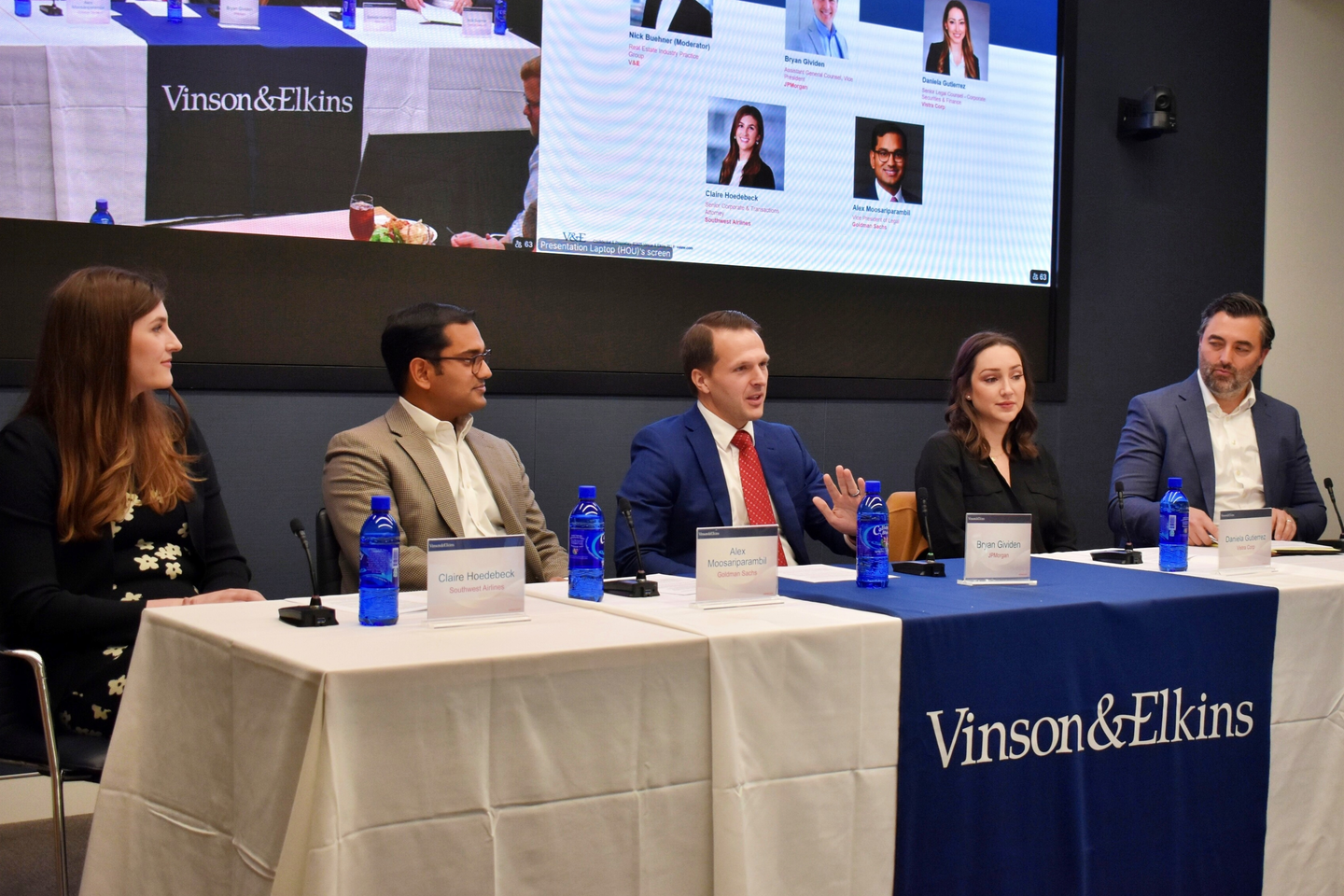
Partner Peter Bergan will moderate a panel at TMT Finance USA 2026 on October 6 titled “How is Datacenter Powered …
October 6, 2026
October 6, 2026 • 1-minute read


Insight
Client Alerts
April 17, 2024 • 4-minute read
On April 12, 2024, the U.S. Supreme Court unanimously held that, in the absence of an otherwise misleading statement, a failure to disclose information required by Item 303 of Regulation S-K (“Item 303”1) does not support a private action under Section 10(b) of the Securities and Exchange Act of 1934 (“Section 10(b)”). The case, Macquarie Infrastructure Corp., et al. v. Moab Partners, L.P., et al., resolves a split amongst several circuits.2
Private securities plaintiffs have long-relied on alleged Item 303 omissions to bring suit under Section 10(b) and Rule 10b-5(b). For years, the circuit courts disagreed on whether a pure omission based on an alleged failure to comply with Item 303 gives rise to an actionable Section 10(b) claim even in the absence of an otherwise misleading statement or independent duty to disclose.3 The Court’s holding in Macquarie settles that disagreement, and “confirms that the failure to disclose information required by Item 303 can support a Rule 10b–5(b) claim only if the omission renders affirmative statements made misleading.”
Plaintiffs in Macquarie claimed that defendant Macquarie Infrastructure Corporation (“MIC”) violated Section 10(b) because Item 303 required MIC to disclose that its business of storing No. 6 fuel oil was at risk due to a pending United Nations agency’s regulation known as “IMO 2020.” The District Court found that MIC did not owe a duty to disclose because it was common knowledge that IMO 2020 threatened all parties in the supply chain for No. 6 fuel oil. The Second Circuit disagreed, relying on its decision in Stratte-McClure v. Morgan Stanley, 776 F.3d 94 (2d Cir. 2015), and finding that the “failure to make a material disclosure required by Item 303 can serve as the basis for . . . a claim under Section 10(b).”
The Second Circuit’s decision, as well as its previous decision in Stratte-McClure, conflicted with cases in several other circuits, which required plaintiffs to show that the company omitted information that made a particular statement misleading, or had an independent duty to disclose the information. The Supreme Court granted certiorari to resolve the circuit split.4
In Macquarie, the Court held that pure omissions do not give rise to a claim under Rule 10b-5(b) and Section 10(b). In doing so, the Court focused on the text of Rule 10b-5(b), finding that it prohibits (1) false statements or lies, and (2) omissions of material facts necessary “to make the statements made . . . not misleading,” meaning “half-truths, not pure omissions.” While “pure omission[s] occur when a speaker says nothing, in circumstances that do not give any particular meaning to that silence,” half-truths are “representations that state the truth only so far as it goes, while omitting critical qualifying information.”5 Therefore, Rule 10b-5(b) requires disclosure only when necessary to clarify or complete a statement.
In support of its interpretation, the Court noted that Congress used different language to explicitly prohibit omissions in registration statements under Section 11(a) of the Securities Act of 1933. Additionally, the Court recognized that, although Item 303 gives rise to a duty to disclose, it “does not automatically render silence misleading under Rule 10b–5(b).” Indeed, the plaintiffs argued that in the context of Item 303, they were not required to identify any statements rendered misleading by a pure omission because “reasonable investors know that Item 303 requires an MD&A to disclose all known trends and uncertainties.”6 The Court rejected this argument because it “reads the words ‘statements made’ out of Rule 10b-5(b) and shifts the focus of that Rule and § 10(b) from fraud to disclosure.”
Finally, the Court found unpersuasive plaintiffs’ contention that barring private claims for pure omissions would give companies a broad grant of immunity, pointing out that private litigants can still bring suit for misleading half-truths, and, importantly, that the SEC retains authority to prosecute violations of its regulations, including Item 303.
All things considered, the Court’s ruling in Macquarie can be viewed as settling a somewhat narrow disagreement among the circuits. For example, the Court carefully limited its holding in Macquarie to cases involving pure omissions, as opposed to half-truths. In addition, the Court expressly declined to address what constitutes “statements made” under Rule 10b-5, what it takes for a statement to be misleading as a half-truth, or whether pure omissions are actionable under Rules 10b-5(a) and 10b-5(c). That said, Macquarie provides helpful and necessary clarity on the viability of private Section 10(b) claims based on Item 303 omissions. Going forward it will be up to district and circuit courts across the country to interpret the case’s scope, and ultimately, its consequences.
1Item 303 requires companies to disclose to the Securities and Exchange Commission (“SEC”) “any known trends or uncertainties that have had or that are reasonably likely to have a material favorable or unfavorable impact on net sales or revenues or income from continuing operations.” 17 C.F.R. §229.303(b)(2)(ii).
2Macquarie Infrastructure Corp. v. Moab Partners, L.P., No. 22-1165, 2024 WL 1588706 (U.S. Apr. 12, 2024).
3Compare Stratte-McClure v. Morgan Stanley, 776 F.3d 94, 101-104 (2d Cir. 2015) (“Item 303’s affirmative duty to disclose in Form 10–Qs can serve as the basis for a securities fraud claim under Section 10(b).”), abrogated by Macquarie Infrastructure Corp. v. Moab Partners, L. P., No. 22-1165, 2024 WL 1588706 (U.S. Apr. 12, 2024) with In re NVIDIA Corp. Sec. Litig., 768 F.3d 1046, 1056 (9th Cir. 2014) (“Item 303 does not create a duty to disclose for purposes of Section 10(b) and Rule 10b–5.”), and Oran v. Stafford, 226 F.3d 275, 288 (3rd Cir. 2000) (holding that a violation of Item 303 will give rise to an actionable omission under Section 10(b) only if the plaintiff independently alleges a duty to disclose).
4“The courts of appeals disagree on whether a failure to make a disclosure required by Item 303 can support a private claim under §10(b) and Rule 10b–5(b) in the absence of an otherwise-misleading statement. This Court granted certiorari to resolve that disagreement.” Macquarie, 2024 WL 1588706, at *4 & n.1.
5Id. To further highlight the distinction, the Court said: “[i]n other words, the difference between a pure omission and a half-truth is the difference between a child not telling his parents he ate a whole cake and telling them he had dessert.”
6Macquarie, 2024 WL 1588706, at *5. This argument likely rings a bell to those familiar with Stratte-McClure. There, the Second Circuit reasoned that “[d]ue to the obligatory nature of these regulations, a reasonable investor would interpret the absence of an Item 303 disclosure to imply the nonexistence of ‘known trends or uncertainties … that the registrant reasonably expects will have a material … unfavorable impact on … revenues or income from continuing operations.’ . . . It follows that Item 303 imposes the type of duty to speak that can, in appropriate cases, give rise to liability under Section 10(b).” Stratte-McClure, 776 F.3d at 102.
This information is provided by Vinson & Elkins LLP for educational and informational purposes only and is not intended, nor should it be construed, as legal advice.
Discover our latest:
Events
Peter Bergan to Moderate Panel at TMT Finance USA 2026
Partner Peter Bergan will moderate a panel at TMT Finance USA 2026 on October 6 titled “How is Datacenter Powered …
October 6, 2026
October 6, 2026 • 1-minute read
CLE Events
Texas Reincorporation 101: Recent Developments and Key Considerations for Boards
Join Vinson & Elkins and FTI Consulting for a webinar on the growing trend of companies reincorporating to Texas.
October 1, 2026
October 1, 2026 • 1-minute read

CLE Events
Financing and Bankability of Data Center Projects
This program will examine the key legal and commercial considerations for financing data center projects, with a focus on what makes these projects bankable for lenders and investors.
September 29, 2026
September 29, 2026 • 1-minute read

Events
Paige Anderson to Speak on BARBRI Webinar
Partner Paige Anderson will speak on BARBRI’s live video CLE program, “Mastering Public and Private REITs: Key Tax, Structuring, Financing, …
September 22, 2026
September 22, 2026 • 1-minute read

Events
Partners Paige Anderson and Vinay Prabhakar will present on myLawCLE’s live CLE program, “REIT Tax in the Data Center Era: …
September 18, 2026
September 18, 2026 • 1-minute read

Deals & Cases
Vinson & Elkins Advises Group 1 Automotive on $1.25 Billion Senior Notes Offering
Vinson & Elkins advised Group 1 Automotive, Inc., a Fortune 250 automotive retailer, in connection with its private placement of …
September 23, 2026
September 23, 2026 • 1-minute read

Deals & Cases
Vinson & Elkins Advises SCF Partners on Close of $800 Million Fund XI at Hard Cap
Vinson & Elkins advised SCF Partners, an investment manager headquartered in Houston, Texas, on the successful formation and final close …
September 23, 2026
September 23, 2026 • 1-minute read

Firm News
Finegold and Comber bring market-leading structured finance experience across energy and infrastructure, including digital infrastructure, and other esoteric asset classes. …
September 21, 2026
September 21, 2026 • 3-minute read

Deals & Cases
Vinson & Elkins advised Goldman Sachs, its West Street Climate Credit Fund (part of Goldman Sachs Asset Management’s private credit …
September 21, 2026
September 21, 2026 • 2-minute read

Deals & Cases
Vinson & Elkins Advises Ellington Financial on $150 Million Senior Notes Offering
Vinson & Elkins served as counsel to Ellington Financial Inc. (NYSE: EFC) (the “Company”) in connection with its offering of …
September 17, 2026
September 17, 2026 • 1-minute read

Articles
Law Is a Practice. So Is Business Development.
Randi Revisore, Lauren Alford, and DeAnna Englezos reflect on two years of success leading BD Lab — Vinson & Elkins’ …
July 14, 2026 • V&E+ | Values
July 14, 2026 • 7-minute read

Articles
Data Center Dealmakers: A New Era of Power and Compute
Vinson & Elkins Partners Creighton Smith and Milam Newby share the story behind a groundbreaking AI infrastructure transaction — and …
June 15, 2026 • V&E+ Ventures
June 15, 2026 • 5-minute read

Client Alerts
Mid-Level Mindset: Empowering Lawyers Through a Pivotal Career Stage
Vinson & Elkins’ inaugural Mid-Level Associate Summit brought lawyers from across the firm to Houston for three days of learning …
March 31, 2026
March 31, 2026 • 5-minute read

Client Alerts
Pro Bono at Vinson & Elkins: Lawyers Changing Lives
Pro Bono Counsel Parker Cragg reflects on a life dedicated to service, returning to Vinson & Elkins, and wisdom he has picked up along the way.
October 20, 2025 • V&E+ Values
October 20, 2025 • 6-minute read

Client Alerts
The Genuine Cup: Soccer Strengthens Our Communities
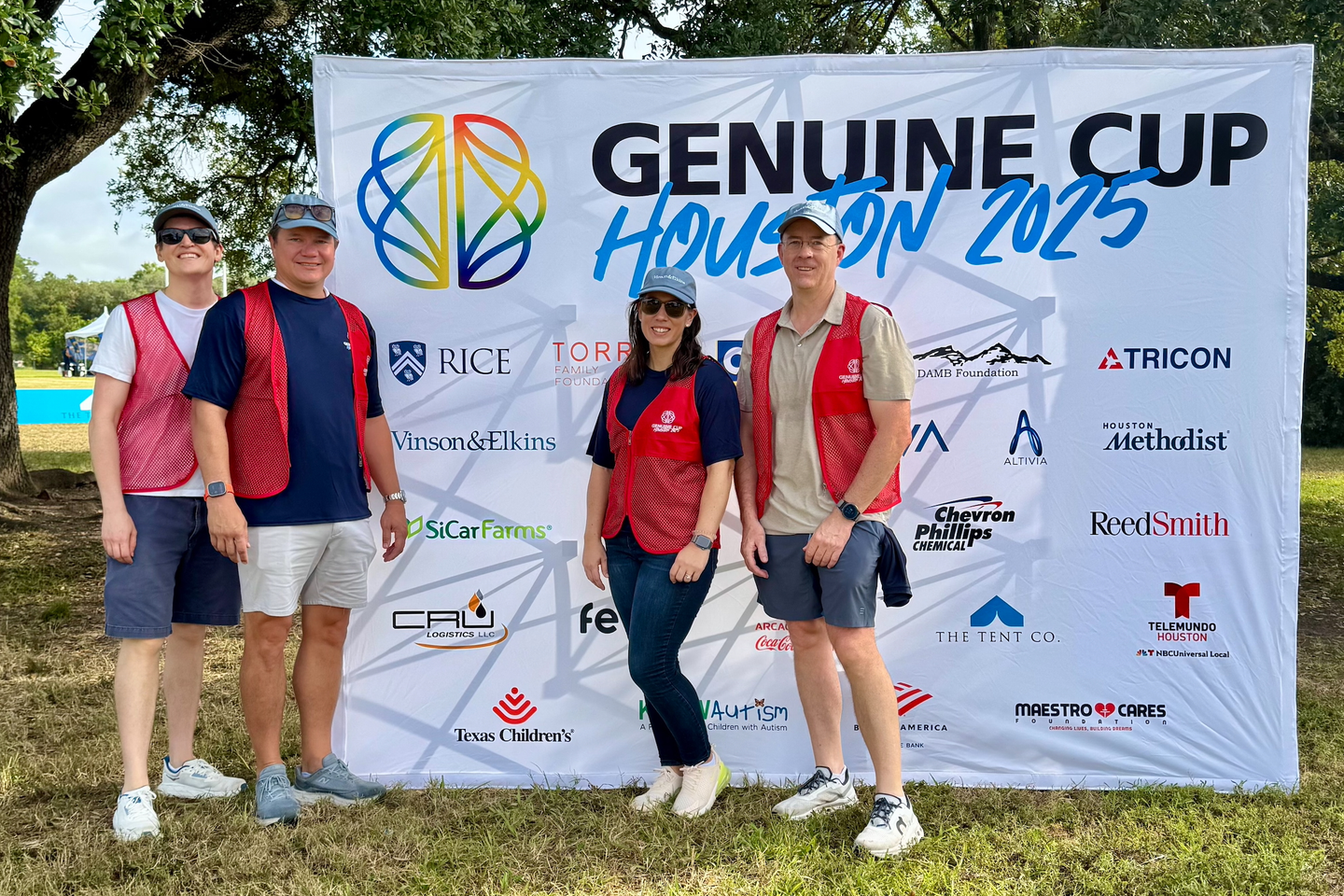
Vinson & Elkins Chair Keith Fullenweider and Vice Chair Hilary Preston, alongside partners Creighton Smith and Jenny Speck, sit down for conversation on a global soccer tournament, the firm’s support for it, and their experience as spectators and volunteers.
August 27, 2025 • V&E+ Values
August 27, 2025 • 7-minute read

Thoughts or questions? Send us a note, and we’ll connect you with the right person.
