








Events
Peter Bergan to Moderate Panel at TMT Finance USA 2026
Partner Peter Bergan will moderate a panel at TMT Finance USA 2026 on October 6 titled “How is Datacenter Powered …
October 6, 2026
October 6, 2026 • 1-minute read


Insight
Client Alerts
The Supreme Court seldom takes up issues around the federal securities laws. But in June, it handed down an important decision involving Section 11 of the Securities Act. Section 11 imposes strict liability on companies when their Securities and Exchange Commission (SEC) registration statements contain material misstatements or misleading omissions. The Court’s decision could alter the calculus for companies looking to go public.
In Slack Technologies, LLC v. Pirani — a 2021 case where a Slack shareholder sued the company for filing a misleading registration statement — the Court decided in favor of the company, ruling that the shareholder failed to show that the stock he bought was issued under the registration statement, as required to bring a Section 11 claim.
In doing so, the Court overruled the Ninth Circuit and confirmed a long-held standard: Only plaintiffs who can trace their shares to a company’s registration statement can sue under Section 11. Plaintiffs who allege a misleading statement, but who can’t satisfy this “tracing requirement,” must prove that the company intended to deceive, manipulate, or defraud — a far more difficult task.
Numerous factors are at play here. But the most important involves how Slack went public. Slack chose a direct listing — where it applied to list its shares on the New York Stock Exchange (NYSE), and filed a registration statement with the SEC that included 118 million shares. Upon the NYSE’s approval of Slack’s listing application and the SEC’s declaring the registration statement effective, holders of those 118 million shares were free to sell them to the public right away.
However, Slack also had 165 million preexisting unregistered shares that were not included in the registration statement, but still potentially able to be sold to the public in reliance on certain Securities Act exemptions. As a result, the Slack plaintiff couldn’t prove that the shares he bought had been included in the registration statement.
Tracing shares to a registration statement is often easier in the context of a conventional initial public offering (IPO), because the investment banks that underwrite IPOs typically negotiate agreements that bar pre-IPO insiders from selling their shares for an extended period of time after the IPO.
Depending on the company’s pre-IPO capital structure, these lockup agreements may cover a substantial portion of the company’s unregistered shares following the IPO. With these lockup agreements in place, plaintiffs seeking to pursue a claim under Section 11 can more easily trace the shares that they purchased to the registration statement.
Slack’s victory raises an interesting question: In structuring their go-public deals, could companies seek to insulate themselves from Section 11 liability by permitting a large amount of unregistered shares to be free from lockup agreements upon going public?
One sign of this would be if more companies begin to favor direct listings over IPOs — making shares harder to trace, and thus making Section 11 claims harder to pursue. Direct listings are generally better for companies that already have many shareholders and don’t need to raise capital at the time of the listing. Direct listings also provide liquidity for a company’s existing investors, and don’t dilute the value of existing shares through the issuance of new shares, as IPOs do.
IPOs, on the other hand, allow companies to raise fresh capital. Underwriters often insist that companies that list through a conventional IPO have lockup agreements in place in an attempt to mitigate the risk that near-term sales by company insiders and certain key investors could weigh on the share price following the IPO.
Another way that companies and their underwriters might aim to help protect against liability would be to lock up fewer pre-IPO shares. As with a direct listing like Slack’s, this approach would potentially make more unregistered shares immediately available for sale to the public than would an IPO in which every (or nearly every) company insider and pre-IPO shareholder is locked up, and thus make shares more difficult to trace.
But this extra protection could come at a cost: The absence of contractual restrictions on the ability of certain pre-IPO shareholders to sell their shares following the IPO could place downward pressure on the share price.
There are a number of considerations for companies deciding whether and how to go public. A need for capital, the current shareholder base, underwriter fees, disclosure requirements, and market volatility, for example, may all weigh on companies’ minds to varying degrees.
The Slack decision has highlighted another variable that companies should consider — potential liability under the securities laws. Companies may be able to mitigate the risk of a Section 11 claim through how they structure their go-public transactions. These choices may involve tradeoffs, however, and companies will need to work with their legal and financial advisors to determine what makes the most sense for them
This information is provided by Vinson & Elkins LLP for educational and informational purposes only and is not intended, nor should it be construed, as legal advice.
Discover our latest:
Events
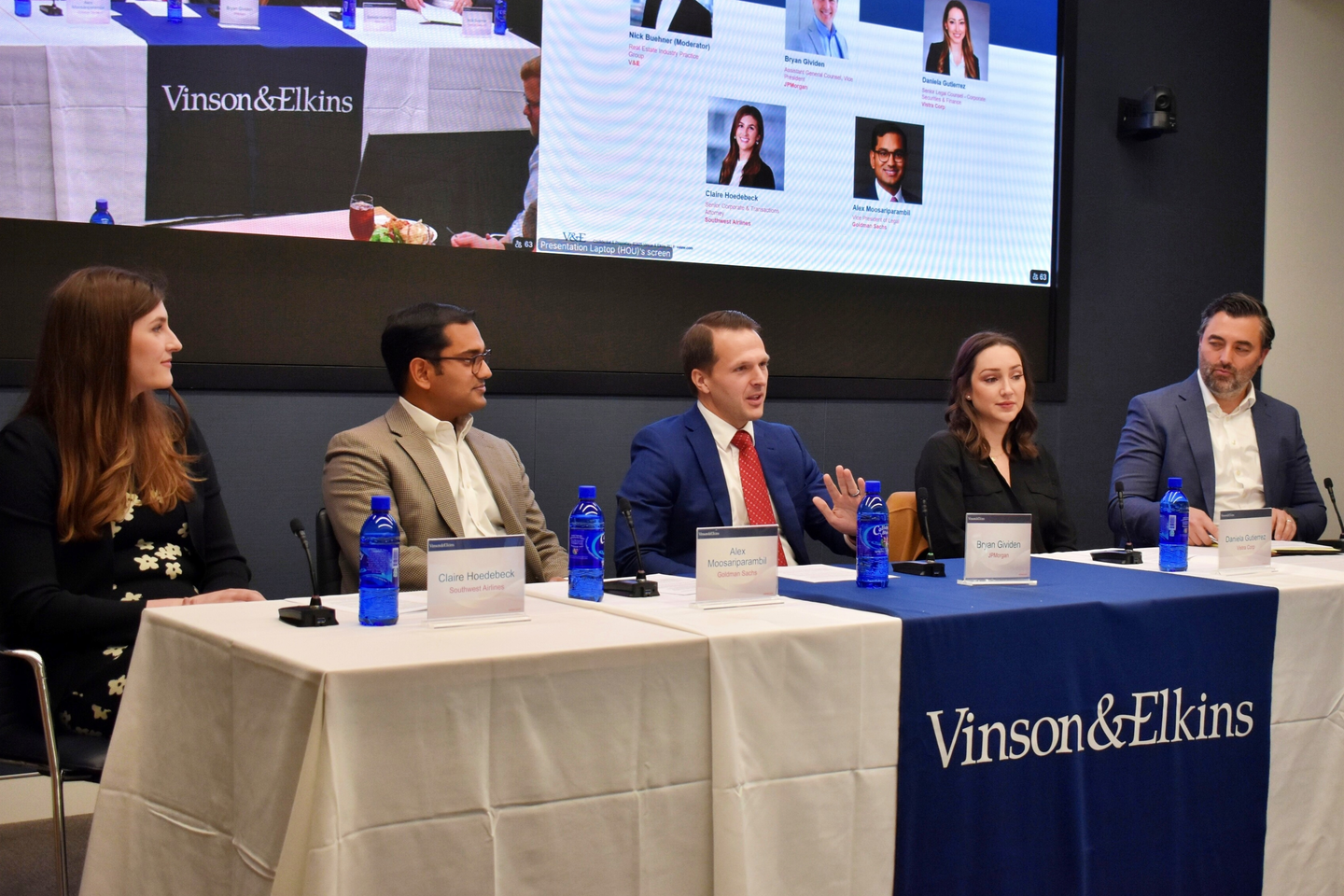
Peter Bergan to Moderate Panel at TMT Finance USA 2026
Partner Peter Bergan will moderate a panel at TMT Finance USA 2026 on October 6 titled “How is Datacenter Powered …
October 6, 2026
October 6, 2026 • 1-minute read
CLE Events
Texas Reincorporation 101: Recent Developments and Key Considerations for Boards
Join Vinson & Elkins and FTI Consulting for a webinar on the growing trend of companies reincorporating to Texas.
October 1, 2026
October 1, 2026 • 1-minute read

CLE Events
Financing and Bankability of Data Center Projects
This program will examine the key legal and commercial considerations for financing data center projects, with a focus on what makes these projects bankable for lenders and investors.
September 29, 2026
September 29, 2026 • 1-minute read

Events
Paige Anderson to Speak on BARBRI Webinar
Partner Paige Anderson will speak on BARBRI’s live video CLE program, “Mastering Public and Private REITs: Key Tax, Structuring, Financing, …
September 22, 2026
September 22, 2026 • 1-minute read

Events
Partners Paige Anderson and Vinay Prabhakar will present on myLawCLE’s live CLE program, “REIT Tax in the Data Center Era: …
September 18, 2026
September 18, 2026 • 1-minute read

Deals & Cases
Vinson & Elkins Advises Group 1 Automotive on $1.25 Billion Senior Notes Offering
Vinson & Elkins advised Group 1 Automotive, Inc., a Fortune 250 automotive retailer, in connection with its private placement of …
September 23, 2026
September 23, 2026 • 1-minute read

Deals & Cases
Vinson & Elkins Advises SCF Partners on Close of $800 Million Fund XI at Hard Cap
Vinson & Elkins advised SCF Partners, an investment manager headquartered in Houston, Texas, on the successful formation and final close …
September 23, 2026
September 23, 2026 • 1-minute read

Firm News
Finegold and Comber bring market-leading structured finance experience across energy and infrastructure, including digital infrastructure, and other esoteric asset classes. …
September 21, 2026
September 21, 2026 • 3-minute read

Deals & Cases
Vinson & Elkins advised Goldman Sachs, its West Street Climate Credit Fund (part of Goldman Sachs Asset Management’s private credit …
September 21, 2026
September 21, 2026 • 2-minute read

Deals & Cases
Vinson & Elkins Advises Ellington Financial on $150 Million Senior Notes Offering
Vinson & Elkins served as counsel to Ellington Financial Inc. (NYSE: EFC) (the “Company”) in connection with its offering of …
September 17, 2026
September 17, 2026 • 1-minute read

Articles
Law Is a Practice. So Is Business Development.
Randi Revisore, Lauren Alford, and DeAnna Englezos reflect on two years of success leading BD Lab — Vinson & Elkins’ …
July 14, 2026 • V&E+ | Values
July 14, 2026 • 7-minute read

Articles
Data Center Dealmakers: A New Era of Power and Compute
Vinson & Elkins Partners Creighton Smith and Milam Newby share the story behind a groundbreaking AI infrastructure transaction — and …
June 15, 2026 • V&E+ Ventures
June 15, 2026 • 5-minute read

Client Alerts
Mid-Level Mindset: Empowering Lawyers Through a Pivotal Career Stage
Vinson & Elkins’ inaugural Mid-Level Associate Summit brought lawyers from across the firm to Houston for three days of learning …
March 31, 2026
March 31, 2026 • 5-minute read

Client Alerts
Pro Bono at Vinson & Elkins: Lawyers Changing Lives
Pro Bono Counsel Parker Cragg reflects on a life dedicated to service, returning to Vinson & Elkins, and wisdom he has picked up along the way.
October 20, 2025 • V&E+ Values
October 20, 2025 • 6-minute read

Client Alerts
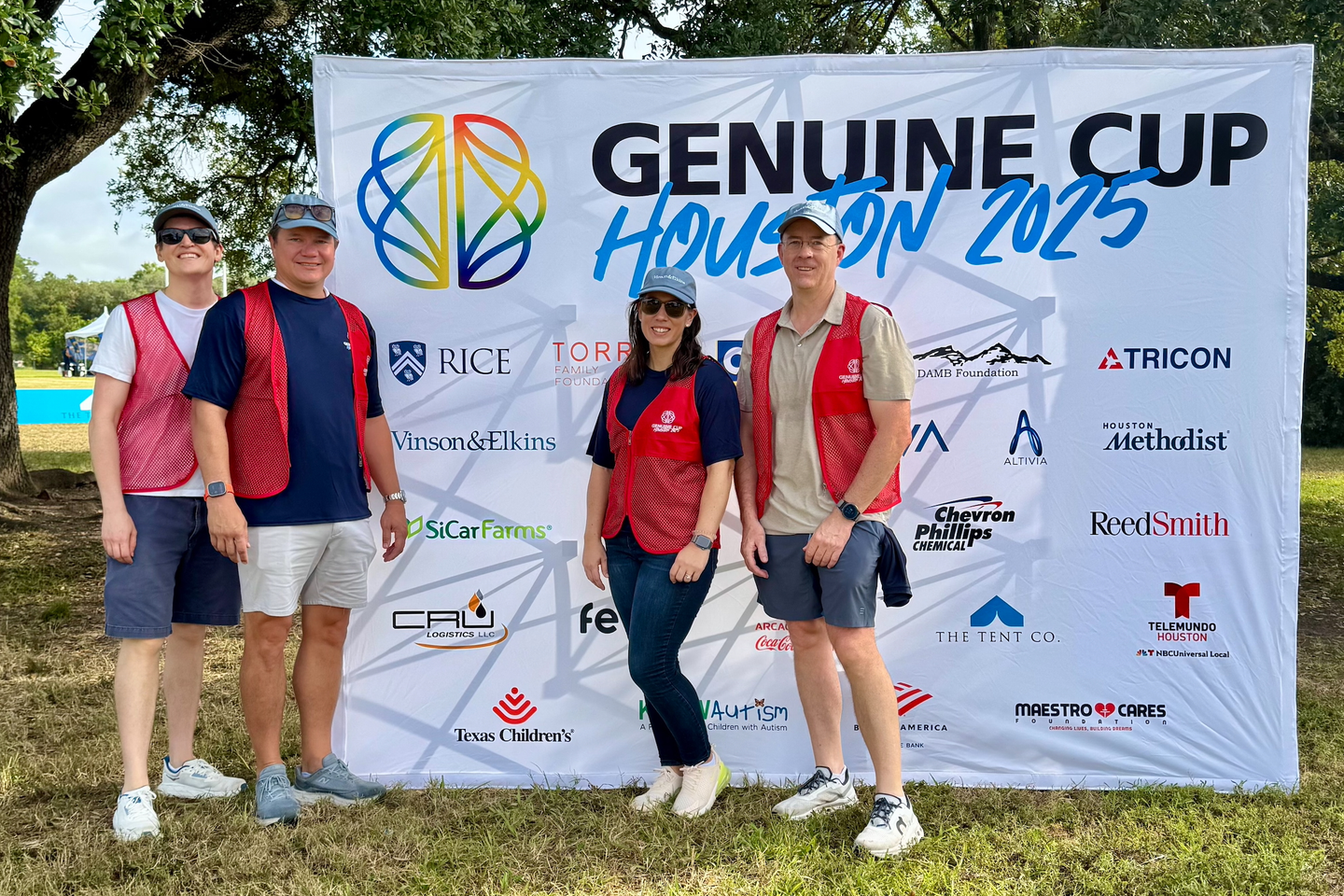
The Genuine Cup: Soccer Strengthens Our Communities
Vinson & Elkins Chair Keith Fullenweider and Vice Chair Hilary Preston, alongside partners Creighton Smith and Jenny Speck, sit down for conversation on a global soccer tournament, the firm’s support for it, and their experience as spectators and volunteers.
August 27, 2025 • V&E+ Values
August 27, 2025 • 7-minute read

Thoughts or questions? Send us a note, and we’ll connect you with the right person.
