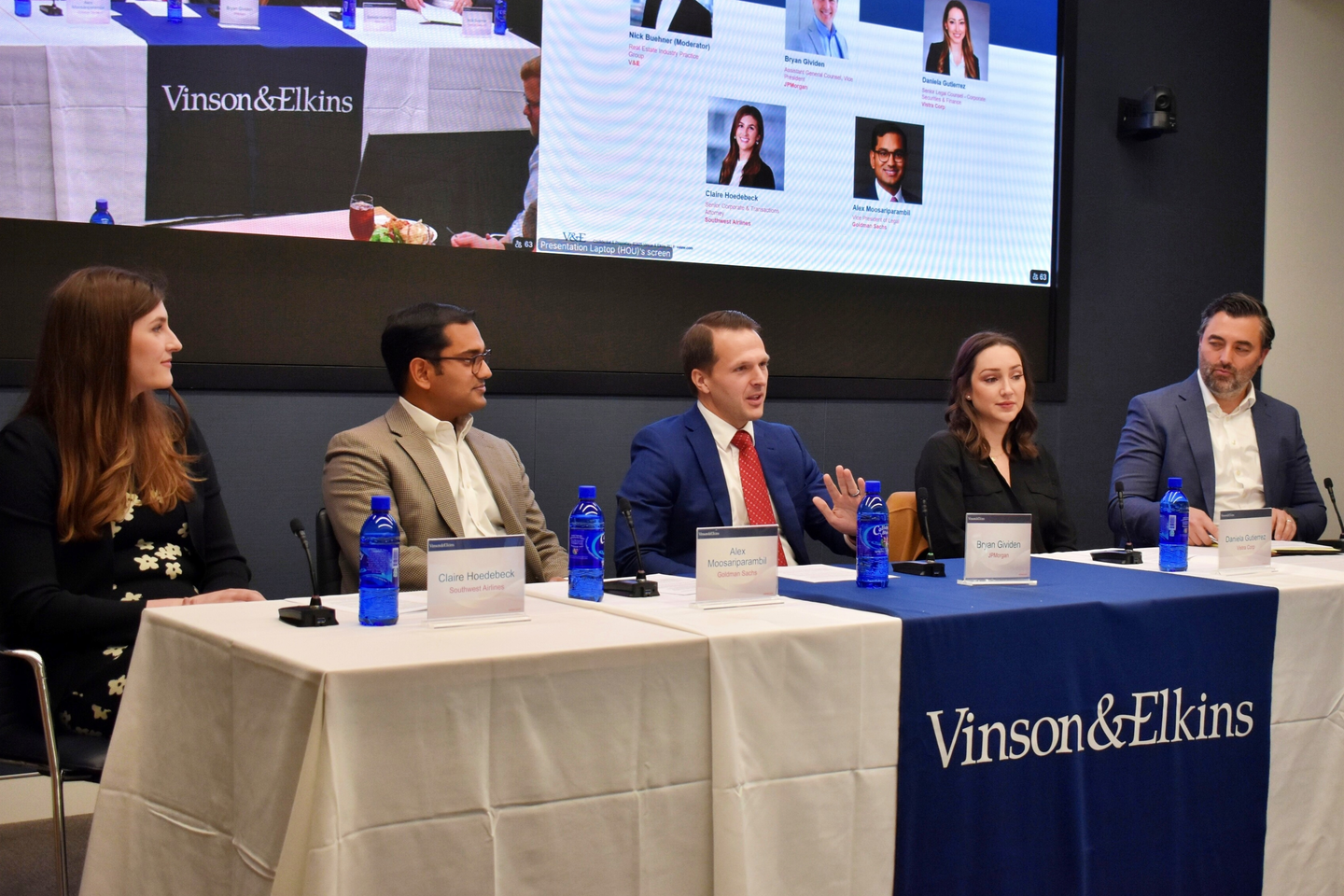
On March 25, 2026, at the 74th ABA Antitrust Law Spring Meeting, five leading competition enforcers from Brazil, Canada, the European Union, Japan, and Mexico sat for the “Enforcers Update: Cartels” panel. The message was clear: enforcers are no longer waiting for leniency applicants to walk through the door. Representatives from each jurisdiction described the investments they have made in tools for proactive detection, including AI-powered screening, embedded law enforcement partnerships, and whistleblower programs, alongside reforms sharpening the incentive to self-report. Leniency is being wielded as both a sword to uncover cartels and a shield to deter them, and companies that delay cooperation — if found liable — may face worse outcomes than those that get in the door early. Below are the key takeaways.
European Union
Maria Jaspers, Director of the Cartel Directorate of the Directorate General for Competition of the European Commission, described an enforcement apparatus that launched investigations based on a range of proactive channels, including its whistleblower program, outreach to non-competition enforcers, and its own market monitoring and screening exercises.
- Landmark food delivery case. The Commission fined Delivery Hero and Glovo a combined €329 million ($377 million) in June 2025. The decision marked the Commission’s first cartel finding in the labor market (no-poach agreement) and the first finding that cartel conduct was facilitated by a minority stake in a rival. According to the Commission, Delivery Hero used its stake in Glovo to coordinate no-poach agreements, allocate markets, and exchange commercially sensitive information well beyond what a financial investor would need. This enforcement action signaled that a firm’s decision to hold an equity stake in its competitors — even a minority stake — can generate significant antitrust exposure in the EC.
- Forensic IT capabilities. The Commission’s forensic IT team accompanies all dawn raids. In one recent case, the team detected and restored deleted WhatsApp messages between competitors and imposed an obstruction fine exceeding €15 million ($17 million).
- “Race for leniency.” The Commission’s proactive detection success is meant to send the message that firms involved in cartel activity should act quickly if they want to qualify for leniency — before the Commission learns about the conduct independently. The EC’s whistleblower channel, which took in 500 tips last year, heightens this dynamic: if an employee reports before the employer seeks leniency, full immunity for the firm is off the table and the maximum reduction drops to 50 percent.
Practical Implication: Any information exchange between competitors should be narrowly tailored, objectively necessary, and done after consulting with counsel. Moreover, attempts to delete communications during a dawn raid risks additional penalties — with a reduced likelihood deleted communications will remain deleted. In sum: the Commission is continuing to take a hardline approach against both cartel conduct as well as procedural infringements.
Brazil
Carlos Jacques, Commissioner of CADE (the Administrative Council for Economic Defense), outlined an enforcement agenda built on three pillars: (1) a continued emphasis on bid rigging in public procurement; (2) increasing attention to cartels in digitally transforming markets; and (3) the ongoing refinement of CADE’s leniency and settlement programs. Jacques reported that CADE opened 27 new cartel investigations across multiple economic sectors in the past year, conducted three dawn-raid operations, and signed two leniency agreements.
- Leniency recalibration. A 2022 amendment in the Brazilian Competition Law introduced double damages in most private civil claims, but leniency signatories are liable for actual damages only. Additionally, successful applicants are not jointly liable for co-conspirators’ damages. CADE’s updated Leniency Guide also expands eligibility, including derivative immunity for affiliates within the same economic group without requiring confession.
- Proactive detection through the “Brain Project.” CADE’s data-screening tool (Projeto Cérebro) consolidates procurement databases and applies statistical models to flag bid suppression, cover bidding, bid rotation, and market allocation. The relatively new tool, launched in 2013, has generated significant cases, including coordinated conduct among 14 companies across 4,700+ medical device procurements and potential collusion in 400+ highway construction projects valued at approximately $1.7 billion.
Practical Implication: Companies in Brazilian public procurement should assume bidding patterns are being algorithmically monitored. Early leniency cooperation offers meaningful protection against double damages.
Japan
Reiko Aoki, Commissioner of the Japan Fair Trade Commission (JFTC), outlined the agency’s strict enforcement philosophy against cartel activity and resale price maintenance. She underscored that traditional cartel conduct remains rampant, even in the digital economy, and that the Commission is prioritizing enforcement in markets where higher prices most impact average consumers.
- Key cases. Aoki described two significant enforcement actions that the JFTC initiated last year. The first was a hub-and-spoke petroleum case in which the Hokushin Branch of the Nagano Prefecture Petroleum Business Association — an energy industry trade association branch — coordinated pricing among members. The JFTC issued a cease and desist order to the Hokushin Branch and imposed fines exceeding ¥116 million. Separately, the JFTC went after Kadoya Sesame Mills and Takemoto Oil & Fat for orchestrating a price cartel that impacted 100 percent of the sesame oil supply to major food-makers. The two conspired to raise prices by exchanging import cost information. Kadoya was fined ¥21.98 million, but Takemoto avoided any fine by self-reporting before the investigation began.
- Leniency remains robust. Japan received 109 leniency applications in 2024 and has averaged 80 per year since its 2006 launch.
Practical Implication: The sesame oil case illustrates early self-reporting’s concrete value: one company paid no fine while the other faced both a surcharge and litigation. Aoki also emphasized that JFTC is actively monitoring algorithmic pricing practices — in addition to more traditional cartel activity — and working with other countries’ enforcers to bring these cases.
Canada
Pierre-Yves Guay, Deputy Commissioner of Competition for Cartels and Deceptive Marketing Practices at the Competition Bureau, reminded the audience that price fixing, market allocation, output restriction, wage fixing, and bid rigging are criminal offenses under Canada’s Competition Act, carrying maximum penalties of fines, imprisonment of up to 14 years, or both. The Bureau is focusing on sectors that matter most to Canadians, including food, housing, and petroleum products, as well as defense-related infrastructure in light of increased federal defense spending.
- Record penalties. Canada Bread received a record $50 million fine for fixing the price of wholesale bread, the largest price-fixing fine ever imposed by a Canadian court, with the investigation still ongoing. In Quebec, six individuals received house arrest totaling seven years for bid rigging on engineering contracts, and firms paid over $12.7 million.
- Proactive detection. Guay also touted the Bureau’s relatively new Digital Enforcement and Intelligence Branch, which engages in web scraping and data-driven investigations to try and ferret out cartel activity. The Branch also operates a Federal Contracting Fraud Tip Line with the RCMP, which has brought in roughly 300 tips each year since its establishment in 2021.
- New guidance coming. The Bureau is currently preparing its first-ever Cartel Enforcement Guidelines, with public consultation expected within the next month.
Practical Implication: The Bureau is building cases through digital intelligence and law enforcement partnerships, not waiting for leniency applications. Companies in food, housing, petroleum, and defense sectors should be particularly attentive.
Mexico
Victor Meyer Suarez, General Director of Cartel Investigations at Mexico’s newly formed National Antimonopoly Commission, described a series of sweeping new changes that are geared towards reshaping the country’s approach to cartel enforcement — most notably, increased fines for refusing to cooperate with investigations. Suarez noted that this change came in response to companies that had been obstructing dawn raids and resisting witness cooperation. The Commission’s enforcement priorities include bid rigging, labor markets, non-compete clauses functioning as cartels in disguise, and information exchange platforms.
- Lower evidentiary bar. Crucially, the Commission no longer needs to prove an agreement to establish liability. It need only demonstrate that competitors exchanged information with the purpose or effect of manipulating prices, restricting output, allocating markets, or rigging bids.
- Platform liability. In January 2026, the Commission charged a platform facilitating real-time exchange of competitively sensitive information between competitors, even absent evidence of actual knowledge of a cartel, under a duty-of-care standard. The case signals that platform operators must affirmatively prevent facilitating collusion.
- Leniency reform. Between 2015 and 2024, 80–85 percent of applications came only after investigations were launched. The 2025 reforms create a stark divide: Applications submitted before an investigation is opened now receive a 100 percent fine discount and full criminal immunity. Those submitted after an investigation has been opened are entitled to a maximum 50 percent fine discount.
Practical Implication: For firms who learn pre-investigation that they may have exposure in Mexico, they should be aware of the massive disparity between self-reporting before an investigation is launched and post-investigation reporting. Additionally, platform operators should assess whether their data-sharing practices could create liability, even if there is no intent to conspire.
What This Means for Companies
The panel’s collective message distills into several takeaways:
- Consider self-reporting sooner rather than later. Every jurisdiction has sharpened the gap between early and late cooperation. Waiting until after an investigation launches could mean significantly reduced benefits.
- Proactive detection is expanding. No jurisdiction reported relying primarily on leniency to identify cartels. Authorities are screening public data, scraping the web (including through the use of AI tools), mining procurement records, and partnering with law enforcement to build cases independently.
- Whistleblower programs are growing. The EC received 500 anonymous tips last year, and the U.S. DOJ paid its first $1 million whistleblower reward in early 2026. EC legislation now mandates internal whistleblower channels at companies of a certain size. A single tip could potentially eliminate the possibility of full leniency.
- Platform operators may face new exposure. Mexico’s pursuit of platforms under a duty-of-care standard, even without intent, suggests that companies operating data platforms may want to assess whether their products could enable collusive outcomes.
- Digital evidence may be recoverable. Forensic IT teams can potentially restore deleted messages, and obstruction can carry its own penalties. Companies may want to train employees that attempting to destroy evidence during an investigation could make things worse, not better.
International cartel enforcement in 2026 is a coordinated, multilateral enterprise. Monitoring and collaboration are happening across jurisdictions, and for companies operating across borders, the calculus is straightforward: early cooperation can significantly lower exposure relative to the cost of getting caught.
This information is provided by Vinson & Elkins LLP for educational and informational purposes only and is not intended, nor should it be construed, as legal advice.