








Events
Peter Bergan to Moderate Panel at TMT Finance USA 2026
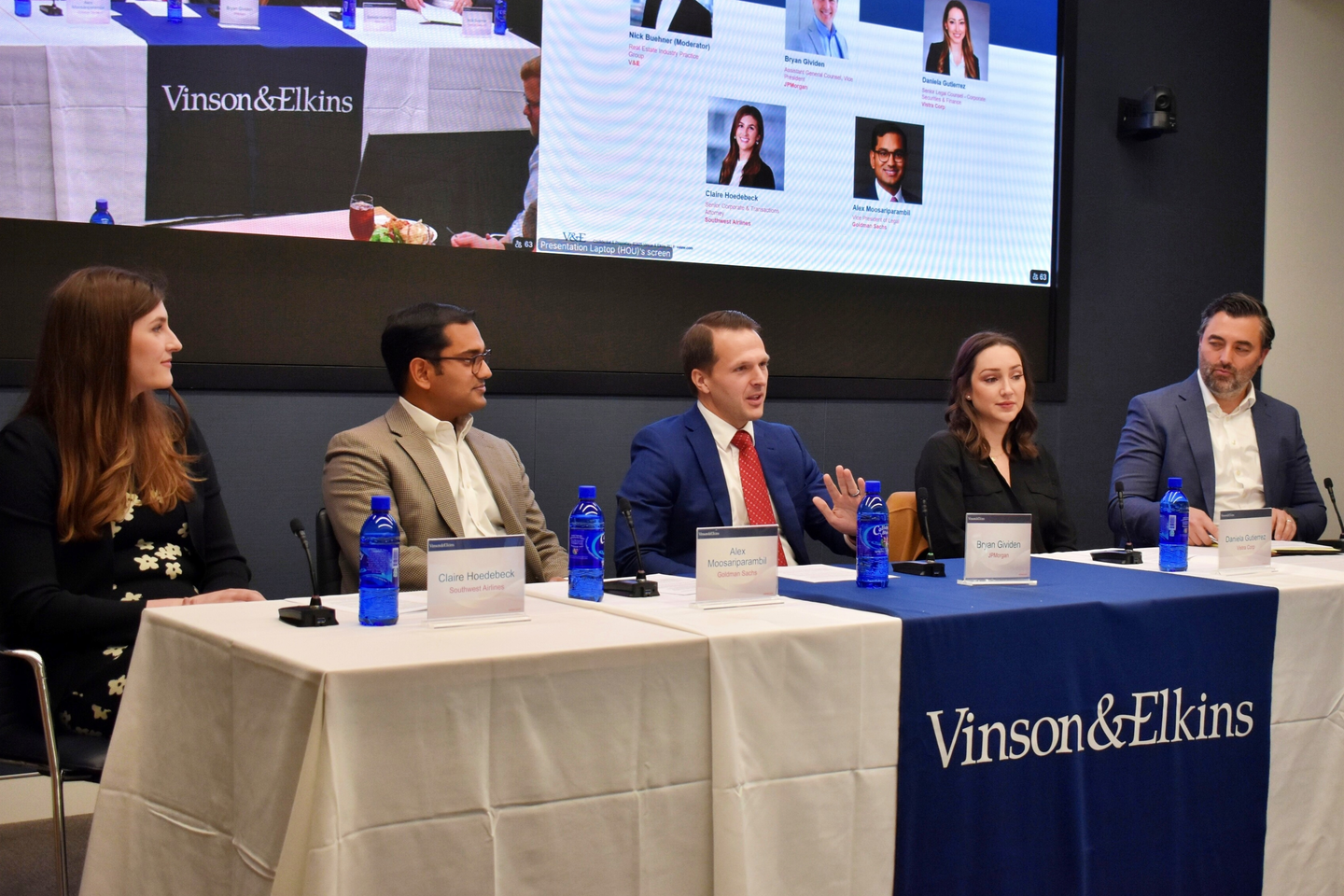
Partner Peter Bergan will moderate a panel at TMT Finance USA 2026 on October 6 titled “How is Datacenter Powered …
October 6, 2026
October 6, 2026 • 1-minute read


Insight
Client Alerts
As the world has grown increasingly climate conscious, many companies have worked to reduce their environmental impact, responding to consumer demand, stakeholder pressure, and regulatory developments. But as companies seek to promote their green bona fides, they are at risk of coming under scrutiny for “greenwashing” — the practice of claiming practices, products, or services as more environmentally friendly than they actually are.
This scrutiny now looks likely to expand and intensify. For the first time since 2012, the Federal Trade Commission (FTC) is reviewing its Guides for the Use of Environmental Claims — non-binding guidance describing the types of environmental claims that could be deemed unfair or deceptive, and how companies can avoid making them.
And it’s not just FTC scrutiny that should worry companies. Plaintiffs already rely on this guidance, better known as the Green Guides, to bring greenwashing litigation. But if the FTC’s review sweeps in net-zero and other corporate sustainability commitments, as is widely expected, many companies could find themselves newly exposed to legal challenges — and at risk of significant harm to their brand and reputation.
As the Commission considers comments on its Green Guides review, companies will want to think even more carefully about how they portray their sustainability work. No two companies are identical, and each greenwashing allegation will have its own facts and circumstances. But to help protect themselves from liability, every company making environmental claims can benefit from following some key principles.
A first principle is to vet and verify. Companies are often eager to promote their environmental benefits, or face pressure to do so from investors or other stakeholders. Yet in their rush to share their sustainability credentials, some companies make little effort to substantiate them — often by relying too heavily on claims from third parties. This can lead to statements that are incomplete, imprecise, or even outright false.
Put simply, companies need hard evidence to back up their claims, and processes in place for compiling it. This means establishing robust internal controls for emissions tracking, data integration and analysis, legal and regulatory compliance, and risk management. It means collaborating across functions, conducting rigorous reviews, and negotiating supply chain agreements to ensure validation and indemnification are in place.
With evidence in hand, companies must make it available. Most consumers won’t take interest in the evidence supporting a company’s environmental claims, but those who do should be able to find it easily. And the information they find — both qualitative and quantitative — should be thorough, specific, and updated frequently.
In disclosing this information, companies will want to detail the assumptions, parameters, and exclusions they rely on to make sustainability-related statements; the sources and methods they use to calculate their emissions; and any climate disclosure frameworks they report against.
The idea is for companies to explain not just what they’re doing, but also how they’re doing it. Companies using offsets to reach carbon-neutrality, for example, would be wise to disclose that they are. They should also understand that using offsets to claim neutrality for substances other than carbon is not always clearly permissible.
Scrutiny of offset regimes is ramping up quickly. A recent investigation found that offsets approved by a leading standard-setter — and used by numerous major corporations — are underpinned by questionable science and math. And a new class action against Delta Airlines, filed in California on May 30, alleges that the company misrepresented itself as the world’s “first carbon-neutral airline.”
Companies should ensure their claims are specific and avoid making unqualified generalities. “Sustainability” — a term not yet defined in the Green Guides — may involve complex concepts predicated on lifecycle assessments. These assessments have complicated methodologies, none with universal acceptance, and thus can yield wide-ranging results.
For instance, if making a new “compostable” product is more carbon-intensive than making a conventional alternative, can the new product really be called “more sustainable” than the conventional one? The answer can be in the eye of the beholder — and depends on what eco-risks they prioritize.
A more practical, consumer-friendly approach is to use plain language that leaves meaning beyond doubt.
Long-term sustainability initiatives — like aspiring to achieve net-zero greenhouse gas emissions or be “free of” some disfavored ingredient by some far-off date — are quickly proliferating. And it might seem that stating an intent to take action is low-risk. Some communications professionals equate this to “puffery” — the generally legal practice of using exaggeration or hyperbole to promote a practice, product, or service.
But well-intentioned environmental aspirations — even those that seem like pie in the sky — are not likely to be taken as puffery by enforcers and the private plaintiffs’ bar. Consumers buy from companies they perceive to be “doing good,” including when the actions they see as virtuous are in their very early stages. So, companies must have realistic plans to reach their goals, and be transparent about progress. Making aspirational statements without a feasible plan to pursue them is likely to be viewed as greenwashing in the unflattering light of litigation.
Finally, sincerity is essential. Many companies advertise their products as “free of” one harmful substance or another, but they should take caution in doing so.
If federal law forbids using lead in a certain production process — or if the product hasn’t historically included lead — claiming that the product is free of lead provides little useful information, and it’d be misleading to imply that its absence is a virtue.
Similarly, a company promoting that its manufacturing is carbon-neutral, while concealing massive emissions of methane or nitrous oxide, might mislead consumers into thinking the company is more climate-friendly than it actually is.
Both types of claims are disingenuous at best — and could be deceptive at worst.
In the decade since the last Green Guides update, companies have taken on ambitious climate-related initiatives that few could have envisioned in 2012, and many have yet to fully grasp how their statements about these initiatives could put them in legal jeopardy.
Where the FTC’s review will land is anyone’s guess. But the Commission’s assertive posture in recent months puts a more prescriptive approach — or even a formal rulemaking proposal — squarely on the table.
For this reason, companies should prepare for a continually evolving landscape. With science advancing, data and technology improving, and regulatory agendas shifting, claims that are above board today might not always be. Claims that have never come into question soon could. And as the Delta lawsuit shows, even the mere allegation of wrongdoing — merited or not — risks damaging a company’s reputation.
Nothing will prevent plaintiffs from filing greenwashing cases. Indeed, the outcome of the Green Guides review will likely embolden private litigants, and broaden the FTC’s latitude to bring enforcement actions. Yet with sound legal advice and robust compliance tools in place, companies can be more confident that any cases they face won’t be convincing.
This information is provided by Vinson & Elkins LLP for educational and informational purposes only and is not intended, nor should it be construed, as legal advice.
Discover our latest:
Events
Peter Bergan to Moderate Panel at TMT Finance USA 2026
Partner Peter Bergan will moderate a panel at TMT Finance USA 2026 on October 6 titled “How is Datacenter Powered …
October 6, 2026
October 6, 2026 • 1-minute read
CLE Events
Texas Reincorporation 101: Recent Developments and Key Considerations for Boards
Join Vinson & Elkins and FTI Consulting for a webinar on the growing trend of companies reincorporating to Texas.
October 1, 2026
October 1, 2026 • 1-minute read

CLE Events
Financing and Bankability of Data Center Projects
This program will examine the key legal and commercial considerations for financing data center projects, with a focus on what makes these projects bankable for lenders and investors.
September 29, 2026
September 29, 2026 • 1-minute read

Events
Paige Anderson to Speak on BARBRI Webinar
Partner Paige Anderson will speak on BARBRI’s live video CLE program, “Mastering Public and Private REITs: Key Tax, Structuring, Financing, …
September 22, 2026
September 22, 2026 • 1-minute read

Events
Partners Paige Anderson and Vinay Prabhakar will present on myLawCLE’s live CLE program, “REIT Tax in the Data Center Era: …
September 18, 2026
September 18, 2026 • 1-minute read

Deals & Cases
Vinson & Elkins represented Select Water Solutions, Inc. (“Select”), a leading provider of full-life cycle water solutions for the energy …
September 25, 2026
September 25, 2026 • 1-minute read

Deals & Cases
Vinson & Elkins represented Energy Vault, Inc. (“Energy Vault”), a global leader in sustainable grid-scale energy storage and AI compute …
September 25, 2026
September 25, 2026 • 1-minute read

Deals & Cases
Vinson & Elkins Advises Group 1 Automotive on $1.25 Billion Senior Notes Offering
Vinson & Elkins advised Group 1 Automotive, Inc., a Fortune 250 automotive retailer, in connection with its private placement of …
September 23, 2026
September 23, 2026 • 1-minute read

Deals & Cases
Vinson & Elkins Advises SCF Partners on Close of $800 Million Fund XI at Hard Cap
Vinson & Elkins advised SCF Partners, an investment manager headquartered in Houston, Texas, on the successful formation and final close …
September 23, 2026
September 23, 2026 • 1-minute read

Firm News
Finegold and Comber bring market-leading structured finance experience across energy and infrastructure, including digital infrastructure, and other esoteric asset classes. …
September 21, 2026
September 21, 2026 • 3-minute read

Articles
Law Is a Practice. So Is Business Development.
Randi Revisore, Lauren Alford, and DeAnna Englezos reflect on two years of success leading BD Lab — Vinson & Elkins’ …
July 14, 2026 • V&E+ | Values
July 14, 2026 • 7-minute read

Articles
Data Center Dealmakers: A New Era of Power and Compute
Vinson & Elkins Partners Creighton Smith and Milam Newby share the story behind a groundbreaking AI infrastructure transaction — and …
June 15, 2026 • V&E+ Ventures
June 15, 2026 • 5-minute read

Client Alerts
Mid-Level Mindset: Empowering Lawyers Through a Pivotal Career Stage
Vinson & Elkins’ inaugural Mid-Level Associate Summit brought lawyers from across the firm to Houston for three days of learning …
March 31, 2026
March 31, 2026 • 5-minute read

Client Alerts
Pro Bono at Vinson & Elkins: Lawyers Changing Lives
Pro Bono Counsel Parker Cragg reflects on a life dedicated to service, returning to Vinson & Elkins, and wisdom he has picked up along the way.
October 20, 2025 • V&E+ Values
October 20, 2025 • 6-minute read

Client Alerts
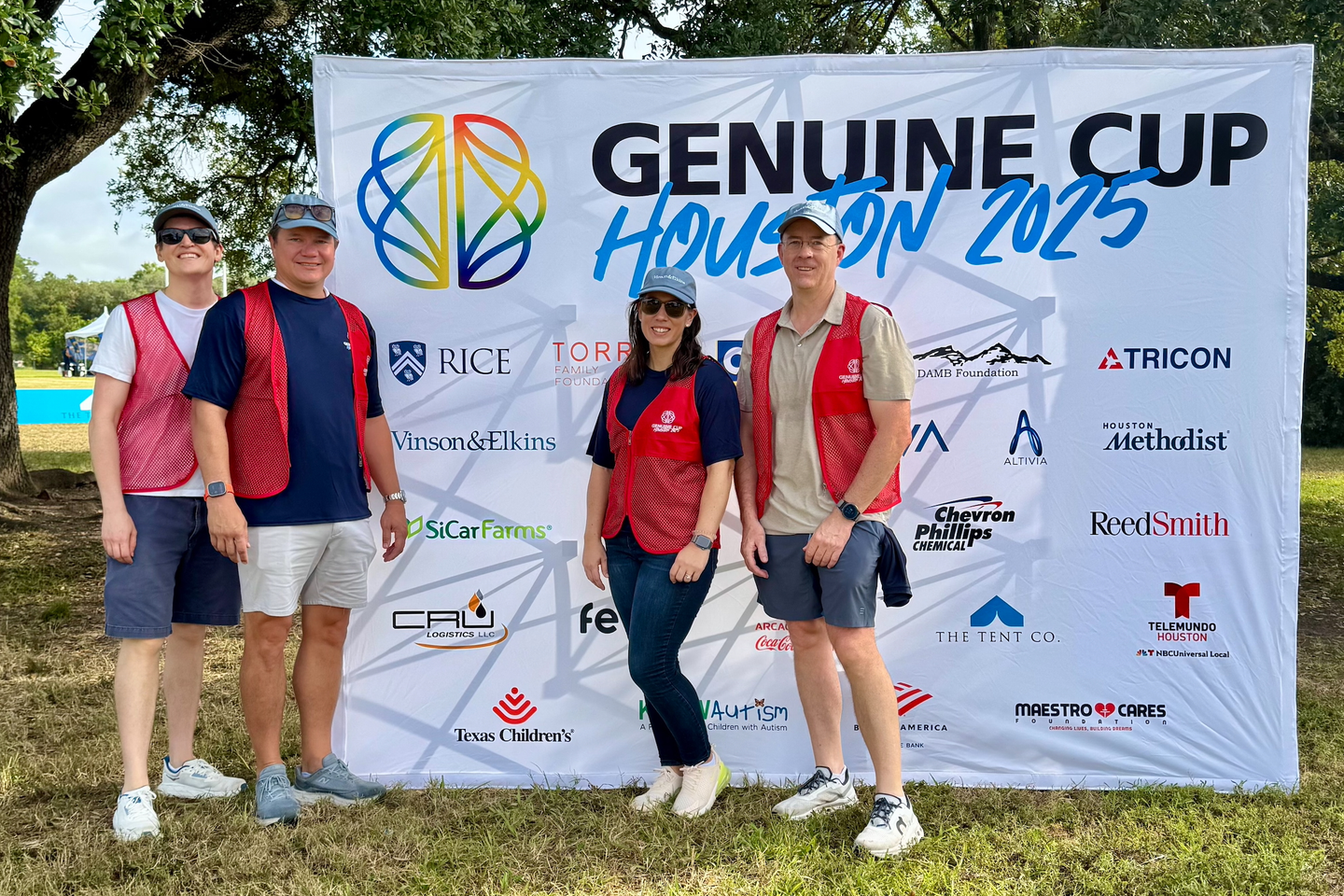
The Genuine Cup: Soccer Strengthens Our Communities
Vinson & Elkins Chair Keith Fullenweider and Vice Chair Hilary Preston, alongside partners Creighton Smith and Jenny Speck, sit down for conversation on a global soccer tournament, the firm’s support for it, and their experience as spectators and volunteers.
August 27, 2025 • V&E+ Values
August 27, 2025 • 7-minute read

Thoughts or questions? Send us a note, and we’ll connect you with the right person.
