








Events
Jenny Speck to Speak at Lockton U.S. Energy Risk Summit
Partner Jenny Speck will speak at Lockton’s U.S. Energy Risk Summit on November 12, 2026, in Houston, Texas. The summit …
November 12, 2026
November 12, 2026 • 1-minute read


Insight
Client Alerts
V&E Antitrust Update
By Mike Scarborough, Dylan Ballard, Kevin Costello, and Madison Lo
February 25, 2025 • 3-minute read
California continues to ramp up recent efforts to ferret out anticompetitive conduct in the Golden State through oversight and enforcement. In 2023, the state appointed an antitrust prosecutor to head up its new Division of Petroleum Market Oversight within the California Energy Commission, to act as an oil “watchdog” and investigate perceived anticompetitive and unethical conduct in the state’s energy markets. In 2024, California’s top antitrust lawyer, Senior Assistant Attorney General Paula Blizzard, announced that, after a 25-year hiatus, the state would seek to resume criminal prosecutions under its antitrust statute, the Cartwright Act. And now, in February 2025, state legislators have introduced SB-763 — a bill designed to deter anticompetitive conduct by ratcheting up the criminal and civil penalties available under the Cartwright Act.
California’s Cartwright Act generally tracks Section 1 of the federal Sherman Act.1 Both statutes prohibit agreements that restrain trade, and conduct that violates Section 1 also tends to implicate the Cartwright Act. Accordingly, California courts often rely on the same case law that federal courts use when applying Section 1 to inform their interpretation and application of the Cartwright Act.2
While both statutes authorize criminal enforcement, one area in which the state and federal statutes differ is the maximum penalties for violations. Under the Sherman Act, individuals who violate Section 1 can be subject to a statutory maximum penalty of ten years in prison and fines of up to $1,000,000 — and this rises to $100,000,000 for corporations.3 By contrast, the Cartwright Act currently caps individual fines at $250,000 and corporate fines at $1,000,000, with imprisonment limited to three years.4
The newly unveiled SB-763 aims to close this gap. Under the proposed bill, the maximum statutory criminal financial penalties under the Cartwright Act would mirror its federal counterpart, allowing $100,000,000 penalties for corporations and $1,000,000 for individuals. While these would be the maximum statutory penalties, it is important to remember that both federal and California antitrust criminal violations can be subject to alternative fine calculations resulting in even higher penalties, up to twice the gain or loss from an antitrust violation. See 18 U.S.C. § 3571(d); Cal. Bus. & Prof. Code § 16755(a)(3).
Under the proposed legislation, the maximum incarceration sentence for violating the Cartwright Act would increase from three years to five years — greater than the existing three-year maximum, but still short of the Sherman Act’s possible ten years.
In addition, the proposed bill would add a new provision to the Cartwright Act (Cal. Bus. & Prof. Code § 16755.1) providing for civil penalties of up to $1 million “per violation” that courts can impose based on factors such as the nature, seriousness, persistence, length of time and willfulness of the defendant’s misconduct, as well as the defendant’s assets, liabilities, net worth and cooperation with the Attorney General. Notably, civil penalties are subject to lower standards of proof than criminal penalties.
State Senator Melissa Hurtado (D-Bakersfield) unveiled the new legislation alongside California Attorney General Rob Bonta on February 24, 2025. She emphasized that the purpose of SB-763 is to ensure “that violating antitrust laws comes with real consequences, not just a slap on the wrist.” As of February 24, the bill sat with the Senate Rules Committee, awaiting assignment to a standing committee. The likeliest candidate is the Senate Business, Professions and Economic Development Committee, whose jurisdiction includes “legislation that pertains to business, professional and trade practices, licensing and regulation” under the California Business and Professions Code.5
It remains to be seen whether SB-763 makes its way through committee — much less whether it passes the State Senate, State Assembly, and is signed into law. That said, antitrust enforcement has proven to be a priority in Sacramento. Attorney General Bonta’s sponsorship and vocal support of the new legislation may signal that there is significant momentum behind it. If nothing else, the bill indicates that the appetite for more robust antitrust enforcement has not yet diminished in Sacramento.
1 William O. Gilley Enterprises, Inc. v. Atl. Richfield Co., 588 F.3d 659, 661 (9th Cir. 2009) (observing that the Cartwright Act is “California’s equivalent to the Sherman Act”).
2 Vinci v. Waste Mgmt., Inc., 36 Cal. App. 4th 1811, 1814 (1995) (“Because the Cartwright Act has objectives identical to the federal antitrust acts, the California courts look to cases construing the federal antitrust laws for guidance in interpreting the Cartwright Act.”).
3 15 U.S.C. § 1.
4 Cal. Bus. & Prof. Code § 16755(a).
5 The Cartwright Act is embedded in the California Business and Professions Code.
This information is provided by Vinson & Elkins LLP for educational and informational purposes only and is not intended, nor should it be construed, as legal advice.
Discover our latest:
Events
Jenny Speck to Speak at Lockton U.S. Energy Risk Summit
Partner Jenny Speck will speak at Lockton’s U.S. Energy Risk Summit on November 12, 2026, in Houston, Texas. The summit …
November 12, 2026
November 12, 2026 • 1-minute read
CLE Events
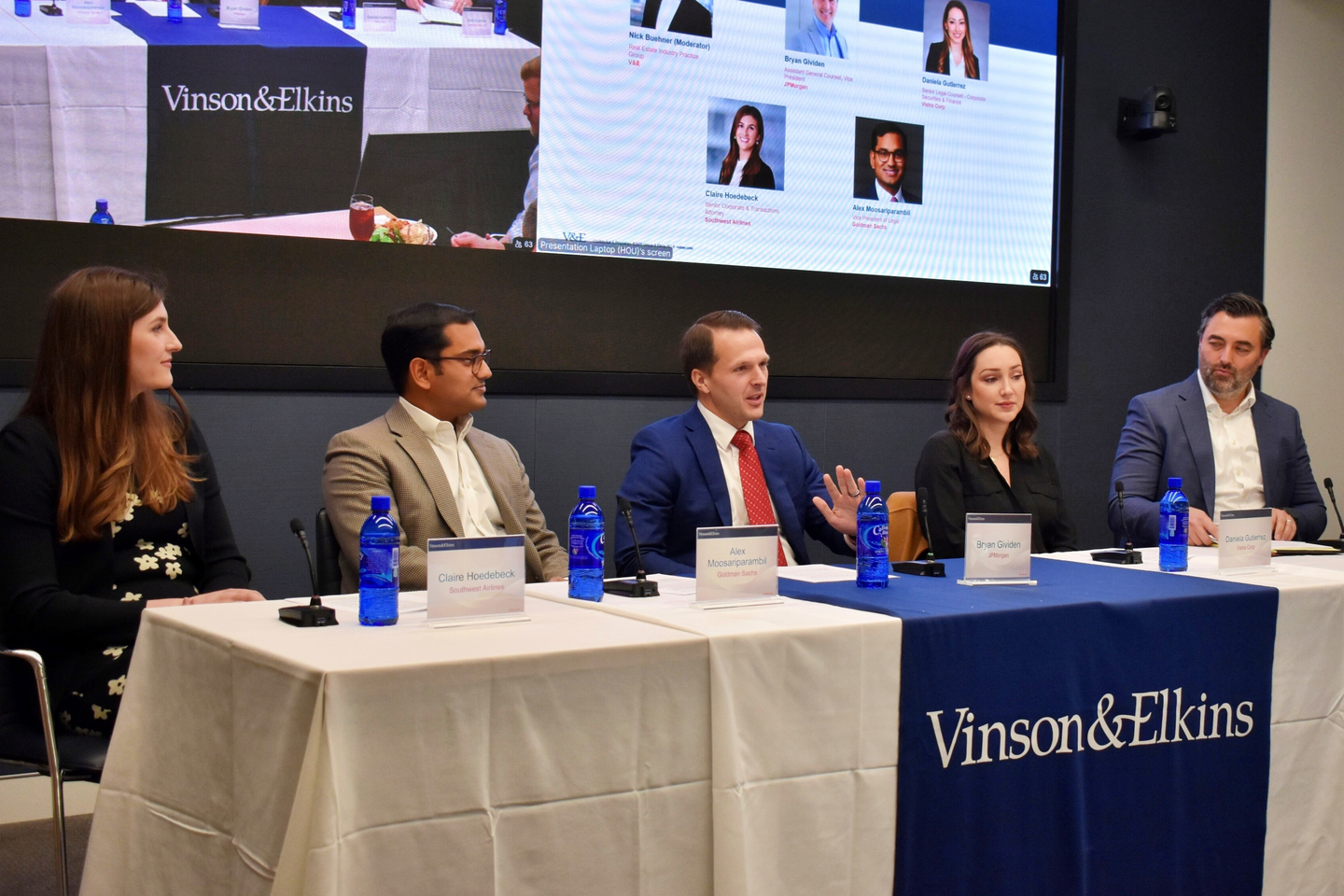
Sixth Annual Navigating the Annual Meeting and Reporting Season
Join leading practitioners and industry voices for a timely discussion of the legal, regulatory, and governance developments shaping the next proxy season.
November 11, 2026
November 11, 2026 • 2-minute read

Events
Jenny Speck Speaking at 2026 AFCC Global Biobased Economy Conference
Partner Jenny Speck will speak at the 2026 AFCC Global Biobased Economy Conference & Exhibit in a session titled “Tax …
November 3, 2026
November 3, 2026 • 1-minute read

Articles
Executive Order 14421: Managing the Risk of a Ban on Chinese Grid Equipment
The nation’s electric grid depends heavily on foreign-made equipment, much of it from China. Depending on how the Dept. of …
October 30, 2026
October 30, 2026 • 1-minute read

Podcasts
Powering Progress Episode 14 – Environmental Litigation and the New Data Center Playbook
This series has explored the extraordinary investment flowing into data centers and the challenges surrounding power, real estate, financing, and …
October 29, 2026
October 29, 2026 • 14-minute read

Media Coverage
Stephanie Noble Featured in Energy & Mineral Law Foundation Member Spotlight
Partner Stephanie Noble was featured in the Energy & Mineral Law Foundation (EMLF) Member Spotlight, where she discussed her path …
October 28, 2026
October 28, 2026 • 1-minute read

Deals & Cases
Vinson & Elkins advised GridStor in connection with the financing of White Tank, a 100 MW / 400 MWh stand-alone …
October 28, 2026
October 28, 2026 • 1-minute read

Deals & Cases
Vinson & Elkins Advises on Bison Oil & Gas IV’s Inaugural $600 Million Senior Notes Offering
Vinson & Elkins advised the initial purchasers in connection with Bison Oil & Gas IV, LLC’s inaugural private offering of …
October 28, 2026
October 28, 2026 • 1-minute read

Firm News
Vinson & Elkins Hires Corporate Partner Lisa Morales
Morales is an experienced M&A lawyer who advises major public companies, financial institutions, and private capital clients on strategic transactions. …
October 28, 2026
October 28, 2026 • 2-minute read

Deals & Cases
Vinson & Elkins Represents Perella Weinberg Partners as Financial Advisor in EQT Takeover of Qiagen
Vinson & Elkins is representing Perella Weinberg Partners as financial advisor to the Supervisory Board of Qiagen N.V. in connection …
October 22, 2026
October 22, 2026 • 1-minute read

Articles
Law Is a Practice. So Is Business Development.
Randi Revisore, Lauren Alford, and DeAnna Englezos reflect on two years of success leading BD Lab — Vinson & Elkins’ …
July 14, 2026 • V&E+ | Values
July 14, 2026 • 7-minute read

Articles
Data Center Dealmakers: A New Era of Power and Compute
Vinson & Elkins Partners Creighton Smith and Milam Newby share the story behind a groundbreaking AI infrastructure transaction — and …
June 15, 2026 • V&E+ Ventures
June 15, 2026 • 5-minute read

Client Alerts
Mid-Level Mindset: Empowering Lawyers Through a Pivotal Career Stage
Vinson & Elkins’ inaugural Mid-Level Associate Summit brought lawyers from across the firm to Houston for three days of learning …
March 31, 2026
March 31, 2026 • 5-minute read

Client Alerts
Pro Bono at Vinson & Elkins: Lawyers Changing Lives
Pro Bono Counsel Parker Cragg reflects on a life dedicated to service, returning to Vinson & Elkins, and wisdom he has picked up along the way.
October 20, 2025 • V&E+ Values
October 20, 2025 • 6-minute read

Client Alerts
The Genuine Cup: Soccer Strengthens Our Communities
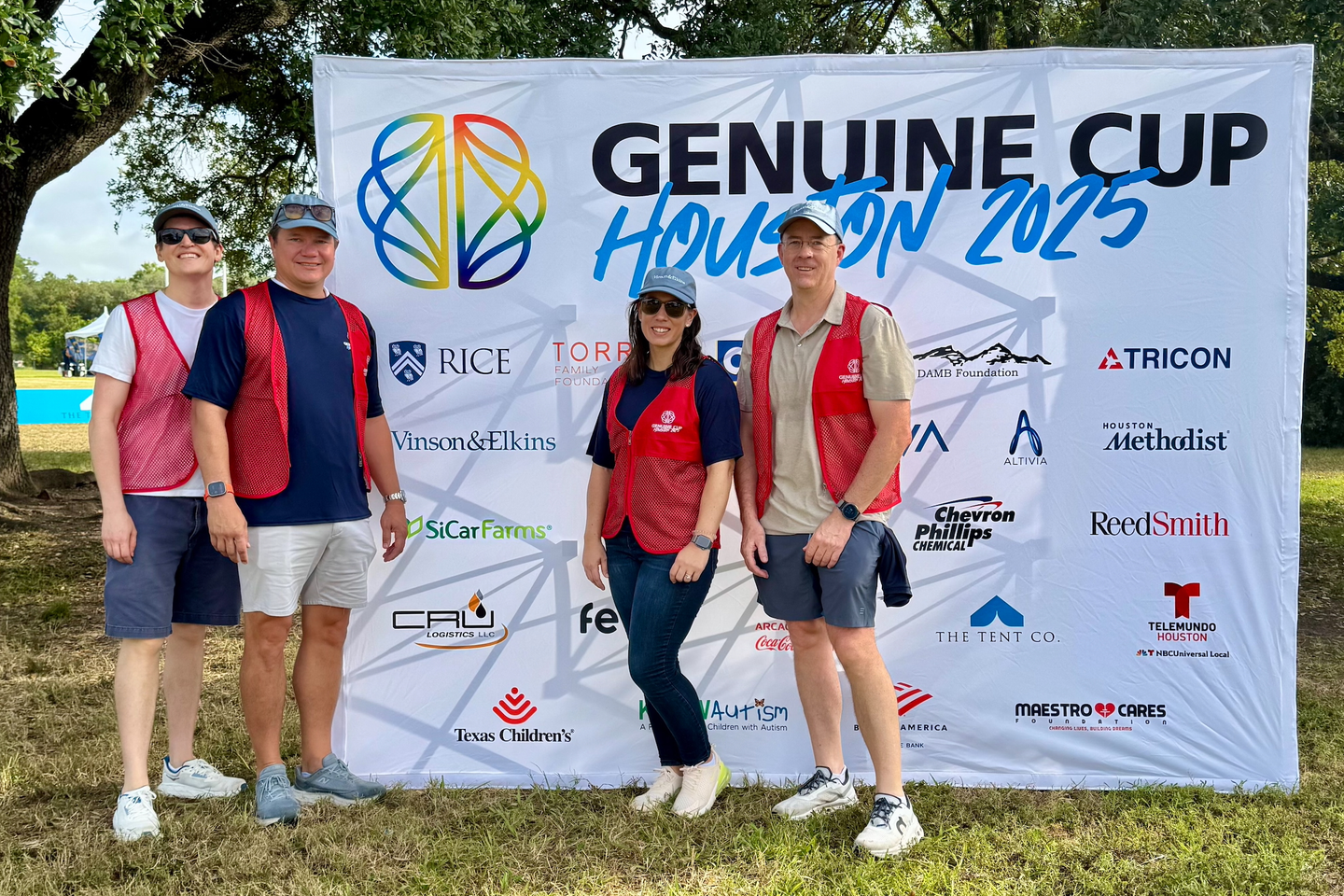
Vinson & Elkins Chair Keith Fullenweider and Vice Chair Hilary Preston, alongside partners Creighton Smith and Jenny Speck, sit down for conversation on a global soccer tournament, the firm’s support for it, and their experience as spectators and volunteers.
August 27, 2025 • V&E+ Values
August 27, 2025 • 7-minute read

Thoughts or questions? Send us a note, and we’ll connect you with the right person.

our People
Please note that any communication with Vinson & Elkins via e-mail through this website does not constitute or create an attorney-client relationship with V&E. Please do not send any confidential information. A conflicts-of-interest procedure must be completed by V&E prior to establishment of an attorney-client relationship. When you execute an engagement letter from V&E you will be our client, and you may then exchange information freely with a V&E attorney.
By clicking “Accept,” you agree that we may review any information you transmit to us. You recognize that our review of your information, even if it is highly confidential and even if it is transmitted in a good faith effort to retain us, does not preclude us from representing another client directly adverse to you, even in a matter where that information could and will be used against you.